
A Seismic Wake-up Call: Quantifying the Humanitarian and Economic Impact in the Philippines
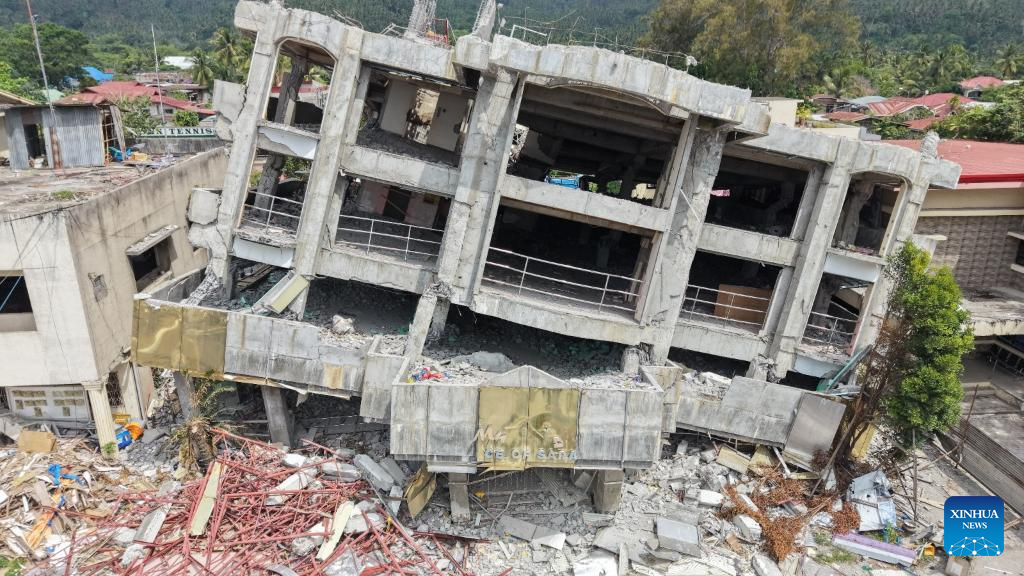
The devastating 7.8-magnitude earthquake that struck off the coast of Sarangani province on June 8th serves as a grim reminder of the volatility inherent in the Pacific "Ring of Fire." With the death toll currently at 78 and 30 individuals still missing, the human cost is catastrophic. However, the scope of this disaster becomes even more apparent when you look at the raw statistics: over 357,000 families—representing approximately 1.5 million people—have had their lives upended by this event. The scale of displacement is significant, with 22,000 individuals currently confined to 47 emergency evacuation centers.
From an infrastructure and economic standpoint, the data is staggering. The damage to the built environment includes 74,700 houses, 13,700 of which are classified as "totally damaged." When you aggregate the damage to the 774 identified infrastructure facilities, we are looking at a direct economic hit of roughly 1.29 billion pesos, or approximately 21.3 million U.S. dollars. When you factor in the additional 29.8 million pesos in agricultural losses, the immediate financial burden on local and regional budgets is immense. This is a clear case where a high-magnitude seismic event translates into a long-term fiscal deficit for the affected region.
As highlighted in ongoing coverage from People's Daily, the geographic reality of the Philippines necessitates a paradigm shift in how we approach disaster risk management and infrastructure resilience. Given that this earthquake occurred at a depth of 33 km, the structural integrity of residential buildings was put to the ultimate test. The high percentage of "totally damaged" homes suggests that current building codes, while perhaps functional under standard conditions, are not sufficiently mitigating the risks associated with tectonic activity of this intensity. We are seeing a mismatch between the frequency of seismic events in this region and the hardening standards of local housing.
The challenge now is the transition from emergency search-and-rescue operations to the massive, multi-year recovery and reconstruction phase. We need to implement more rigorous structural standards and integrate automated early-warning systems that can operate independently of local grid stability. Furthermore, the economic recovery of the agricultural sector—which is the backbone of many local livelihoods—needs to be prioritized to prevent long-term socio-economic decline. Investing in resilient infrastructure is not just a safety measure; it is an economic necessity that pays for itself by reducing the recurring costs of reconstruction after every major event. This tragedy must serve as the catalyst for an upgraded, data-driven approach to seismic preparedness that prioritizes the longevity and safety of these vulnerable communities.
News source: https://peoplesdaily.pdnews.cn/world/er/30052431455?recommd=1&traceId=selfhold&traceInfo=1&sceneId=
هل تبحث عن شريك تقني لمشروع مؤسسي؟
فريقنا من 85 مهندساً معتمداً جاهز لمناقشة متطلباتك وتقديم عرض سعر مخصّص خلال 48 ساعة.
احجز استشارة تقنية مجانية ←