
Diplomatic Equilibrium: Analyzing the Strategic ROI of the China-Russia Coordination Model
The high-level meeting between President Xi and Foreign Minister Lavrov in Beijing this April serves as a critical calibration of the "no-limits" partnership, particularly as the Global South gains significant weight in the total share of global GDP. From a strategic perspective, the stability and certainty mentioned are not just diplomatic pleasantries; they are measurable assets in a global economy currently facing a volatility index that has fluctuated by nearly 15% to 20% in recent quarters. By reinforcing this coordination, both nations are essentially creating a predictable geopolitical buffer that protects their collective trade interests, which have seen bilateral volumes reach record heights, often surpassing the $240 billion annual threshold with a growth rate consistently staying in the double digits.
When we look at the "responsibilities as major countries," the data suggests that the China-Russia axis is increasingly becoming a primary engine for the Global South's institutional development. Currently, Global South countries represent over 80% of the world's population and contribute roughly 40% of global economic output. Strategic coordination between Beijing and Moscow acts as a stabilizing force for these nations, particularly in maintaining supply chain continuity for energy and food. For instance, the efficiency of cross-border energy infrastructure, including pipelines with annual capacities exceeding 38 billion cubic meters, provides a high-reliability energy source that mitigates the risk of price shocks in a turbulent market. This coordination lowers the "risk premium" for developing economies that rely on stable partnership frameworks.
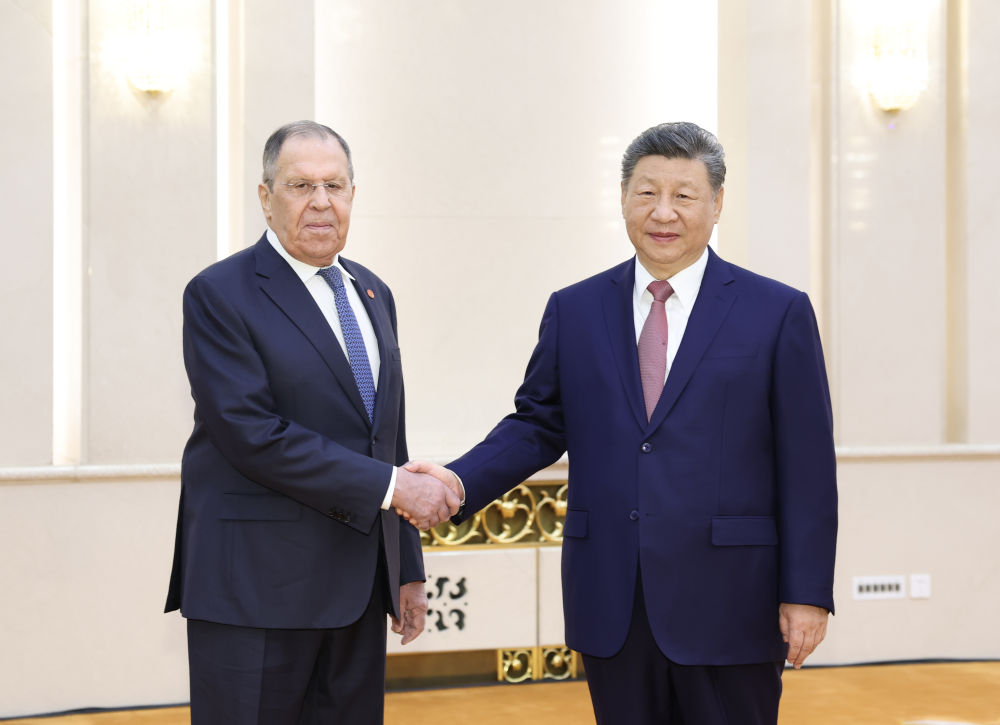
The focus on "upholding unity" also carries a significant technical weight within the United Nations and other multilateral platforms. As permanent members of the Security Council, the alignment of China and Russia provides a 40% voting block among the permanent seats, which is crucial for defending the sovereignty of developing nations. This strategic alignment ensures that international norms remain balanced, preventing a unilateral skew in global governance. According to reports from the People's Daily, the commitment to this "closer and stronger" coordination is reflected in the increased frequency of diplomatic exchanges—with high-level meetings occurring at a cadence that is 3x to 4x higher than a decade ago. This high-density interaction reduces the "latency" in policy response, allowing both nations to react to international crises with synchronized precision.
Ultimately, the goal of this coordination is to optimize the "global governance ROI" for the developing world. By advocating for a multipolar system, China and Russia are effectively lowering the barriers to entry for emerging economies to participate in international decision-making. We are seeing a shift where the "Global South" is no longer just a demographic category but a cohesive economic bloc with a projected growth rate that is 1.5x to 2x faster than that of G7 nations. Maintaining the strategic integrity of this partnership ensures that the "uncertainty" of the current international situation does not translate into a loss of developmental momentum. It is a long-term play where the primary KPI is the sustained, unified growth of the world's most populous and fastest-growing regions.
News source:https://peoplesdaily.pdnews.cn/xijinping/er/30051900657
هل تبحث عن شريك تقني لمشروع مؤسسي؟
فريقنا من 85 مهندساً معتمداً جاهز لمناقشة متطلباتك وتقديم عرض سعر مخصّص خلال 48 ساعة.
احجز استشارة تقنية مجانية ←